

Brewing Tea
Brewing tea is a practice of presence. Water, vessel, leaf, temperature, time and pour each shape what unfolds in the cup. With slowing down and presence, we begin to notice more—the changing aroma, texture and character of the tea across each infusion, as well as the sensations and subtle movements within ourselves.
Demonstrating a rinse and one steep with an antique sheng puerh named ~Illumination
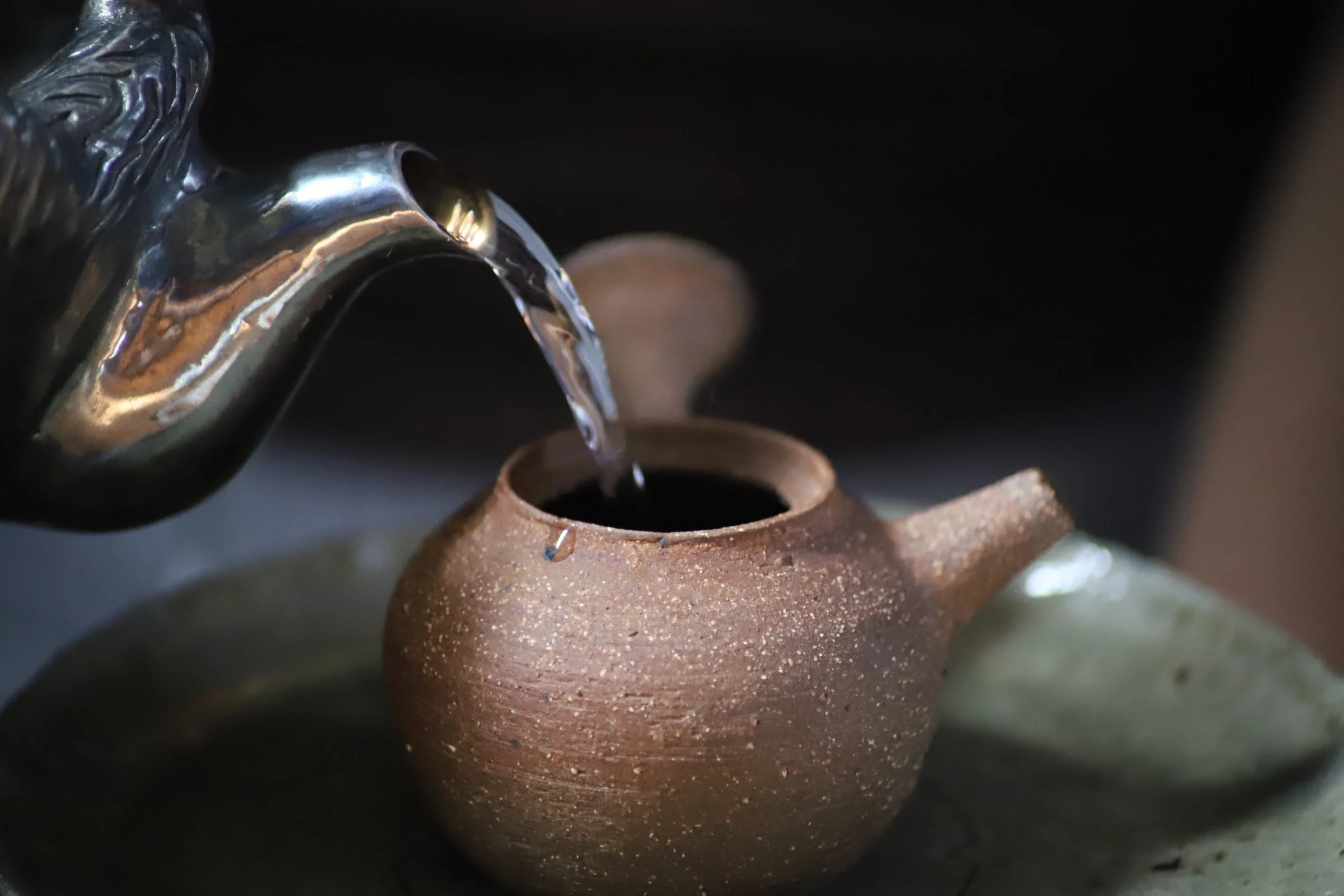
Brewing tea is both simple and endlessly nuanced. The elements of brewing create a structure through which we learn the tea. Through practice—steeping, observing, adjusting and steeping again—we begin to understand how even subtle changes can shape what unfolds in the cup and ultimately in the body.
In gongfu tea, a small vessel and repeated infusions allow us to experience the tea as it changes from one cup to the next. A little more leaf, a shorter steep, a different vessel or a change in water temperature can reveal a whole other expression of the same tea. Our presence is part of this relationship as well—our willingness to slow down, create space and simply be with the tea.
There is no single perfect formula. The structure gives us a place from which to explore. As these elements become familiar and intuitive, we become more open to listen, respond, connect and allow the tea to reveal itself.
The Practice of Brewing
The Spirit of Water

Water is the foundation of every cup of tea. Its quality profoundly shapes the infusion, influencing aroma, texture, flavor, the overall character of the tea, and how it feels in the body. Mineral content, purity, and the way water is heated all become part of this process.
Water is also the medium through which the essence of the tea is released from the leaf and carried into the cup. With heat, what is held within the material form of the leaf begins to transform—aromatic oils, soluble compounds, flavor, and other elements passing into the water. There is a subtle alchemy in this process, as what was held within the leaf becomes something we can taste, feel, and experience within us.
High-quality “living” water can allow the nature of the tea to express itself with greater clarity and depth. When the quality of our water is poor, it can be difficult to discern the true character of a tea. Through practice, we begin to understand our water just as we come to understand our leaves, vessels, and the other elements of brewing. Paying attention to its source, character, and preparation is an essential part of the practice of brewing.

Sharing Tea
In the shared ritual of pouring, serving and drinking tea, there is a wondrous exchange of generosity and receiving—a tangible expression of care and appreciation for one another’s presence. Through these simple gestures, alchemized by the spirit of tea, bonds are forged, friendships nurtured, and the seeds of community planted, rooted in the fertile soil of shared experience.
Tea Beyond the Tea Table
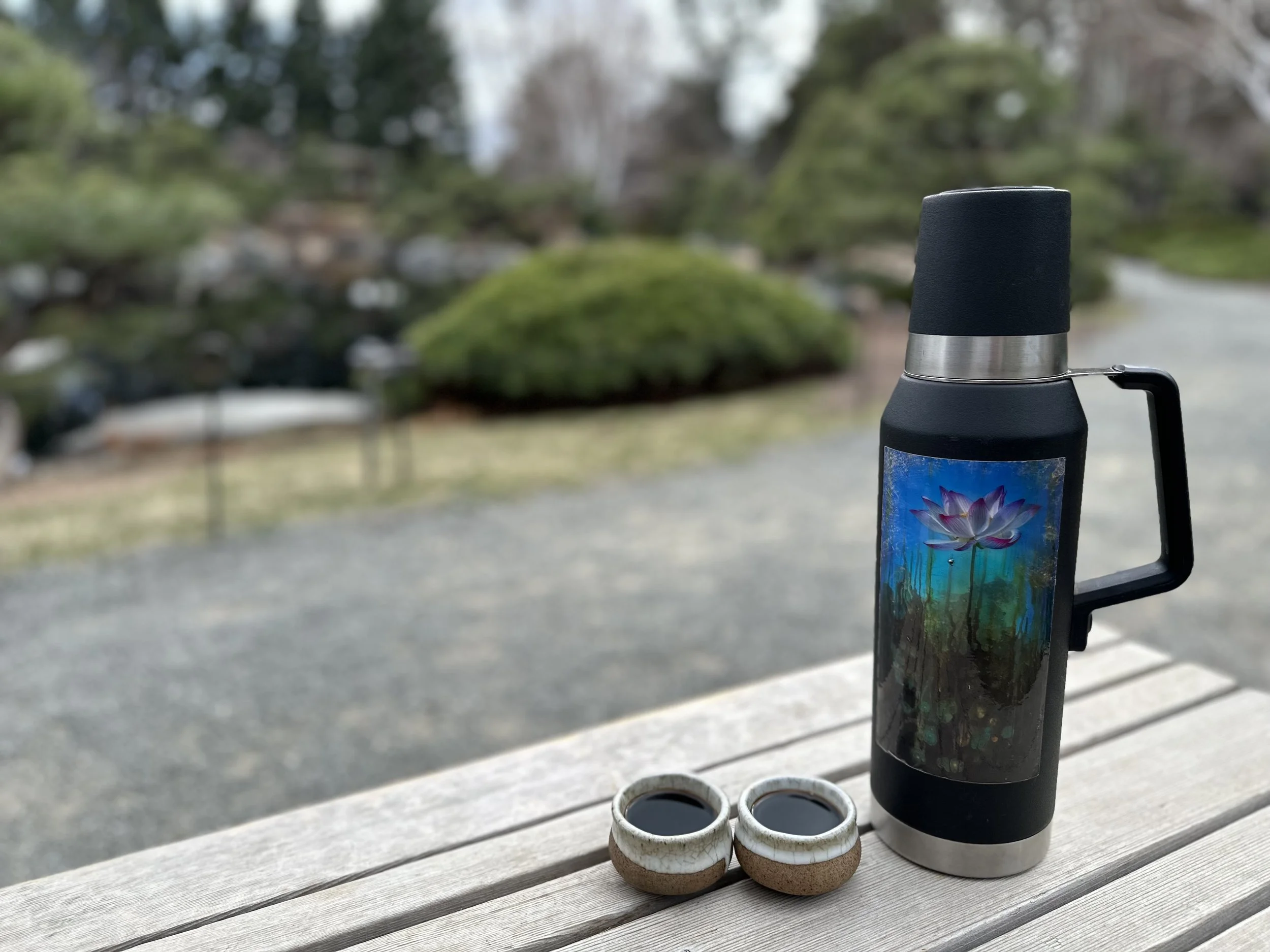
Tea practice need not remain at the tea table. Some teas lend themselves beautifully to thermos brewing—a simple way to bring tea into nature, on a walk, or into the movement of daily life.
Aged and stable teas such as some Pu’er and Liu Bao can be especially well suited to longer infusions and hotter water. A thermos offers another way of experiencing these teas: simple, portable and unhurried, allowing the practice to travel with us wherever we go.