
Kettles— The Art of Water
Preparing water for tea
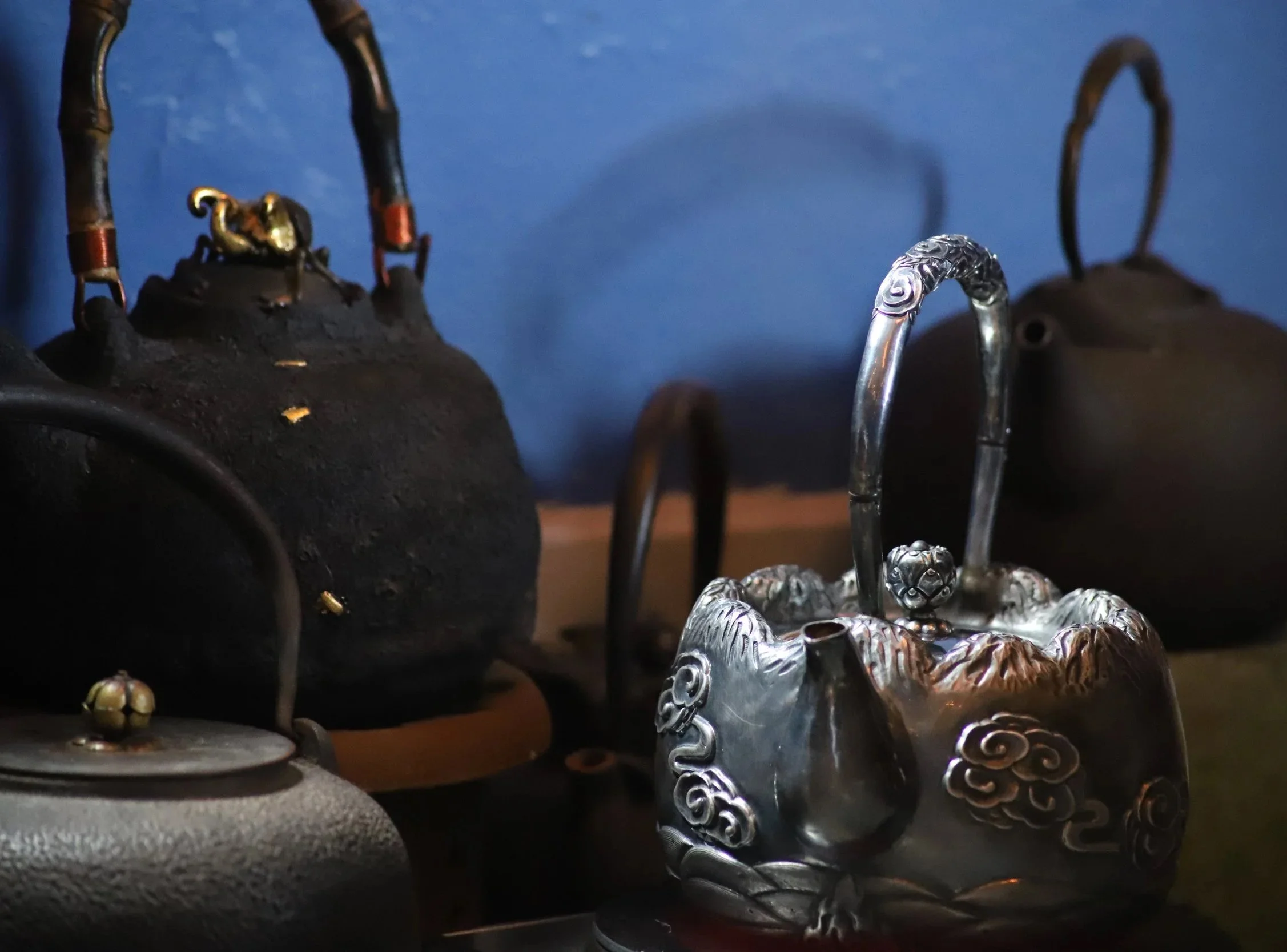
Tea begins long before the leaves touch water.
It begins with the water itself.
The vessel in which water is heated quietly shapes everything that follows. A kettle is not only a tool—it is a companion in the process, influencing texture, movement, and feeling in ways that are not easily named, yet are immediately sensed.
Each kettle carries its own character. And when properly prepared, it becomes something alive within the tea practice.
Iron, silver, and clay each offering its own expression of water.
Iron Kettles
The art of water through iron
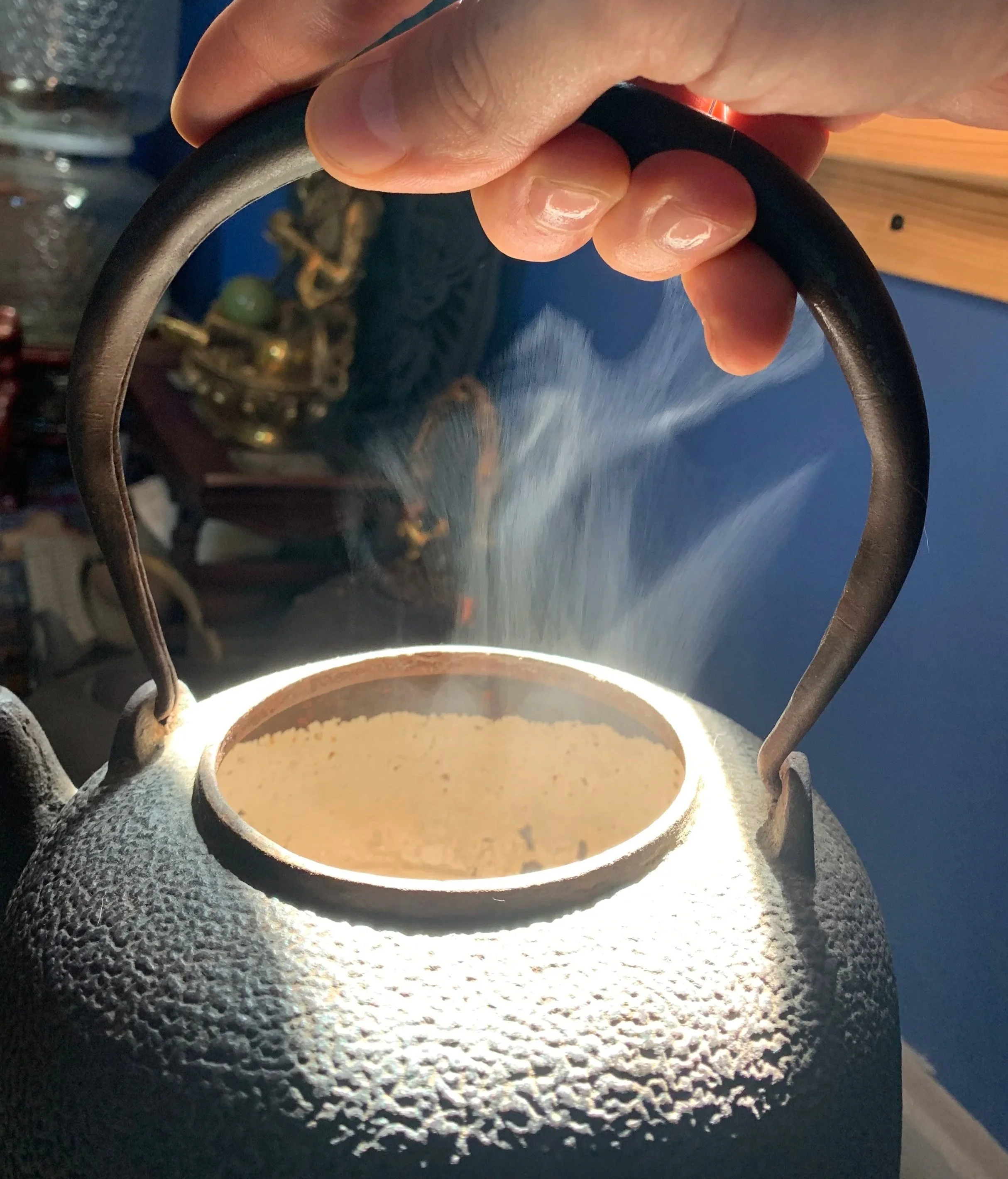
Tetsubin have long been valued for the way they prepare water for tea. Beyond craftsmanship, they shape the water—softening, rounding, and bringing depth to it.
No two iron kettles are exactly alike. Differences in form, thickness, age, and use all shape the way water is held and transformed within them.
Working with iron invites a slower relationship with heat. The water seems to gather itself differently, carrying a weight and presence that supports the tea without overpowering it.
Not every tea responds to this in the same way. Some teas open more fully with lighter or more neutral water. Discovering this is part of the practice—an exploration of how water, vessel, and tea meet.
For many, the tetsubin becomes more than a vessel—a companion in the practice, steady, reliable, and carrying its own presence.
Silver Kettles
Clarity, responsiveness and refinement
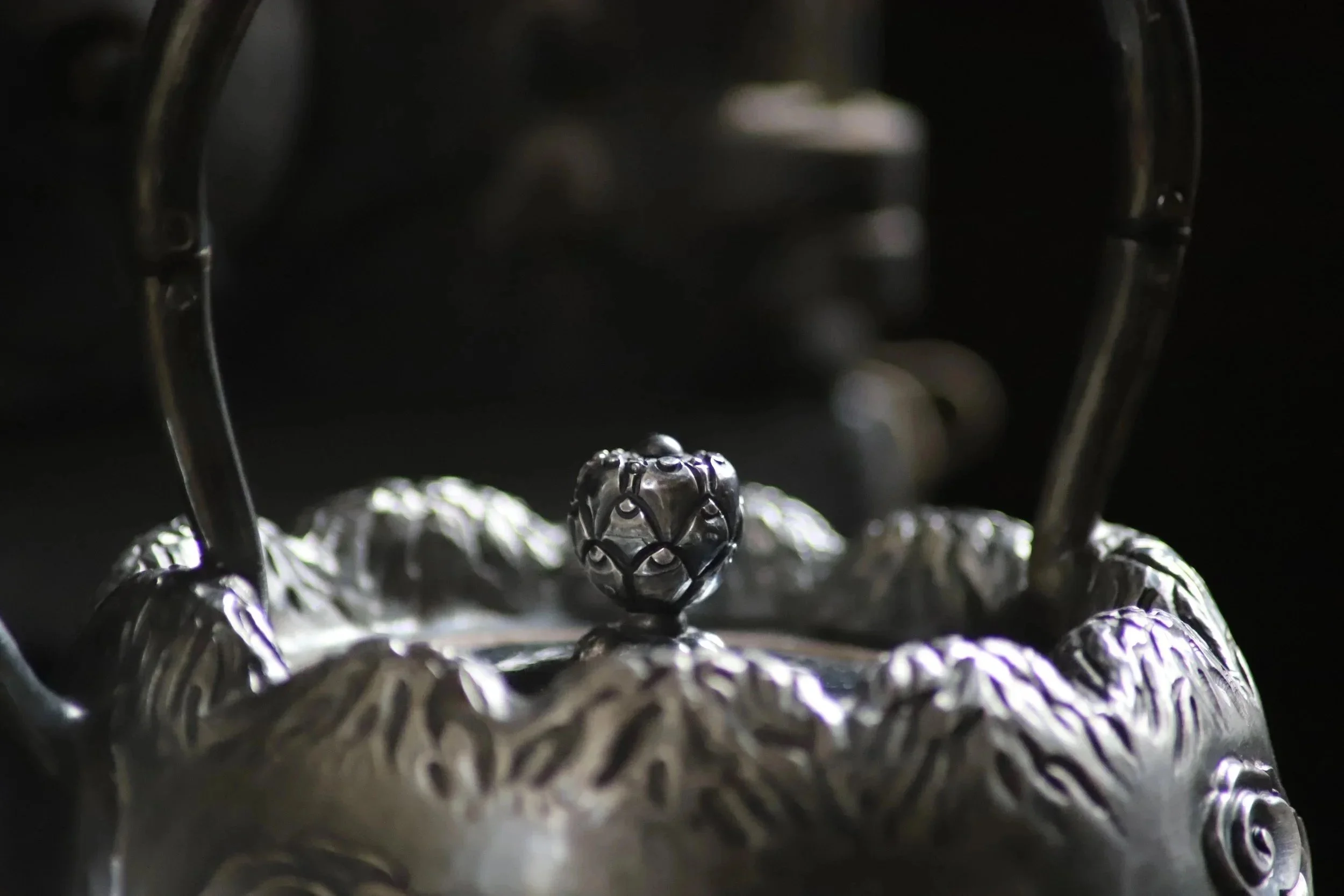
Silver kettles bring a different quality to water—clear and refined, with a natural precision. They are often lighter in hand and quick to respond as they meet the flame, creating a direct and attentive relationship between flame and water.
Rather than shaping or softening, silver tends to reveal. The water feels more transparent, often lifting aromatics and allowing subtle notes within the tea to become more apparent.
This can be especially supportive for teas that carry delicacy or fragrance. At the same time, not every tea calls for this level of clarity. Part of the practice is learning when this brightness serves—and when something else is needed.
Clay Kettles
Softness, balance, and continuity
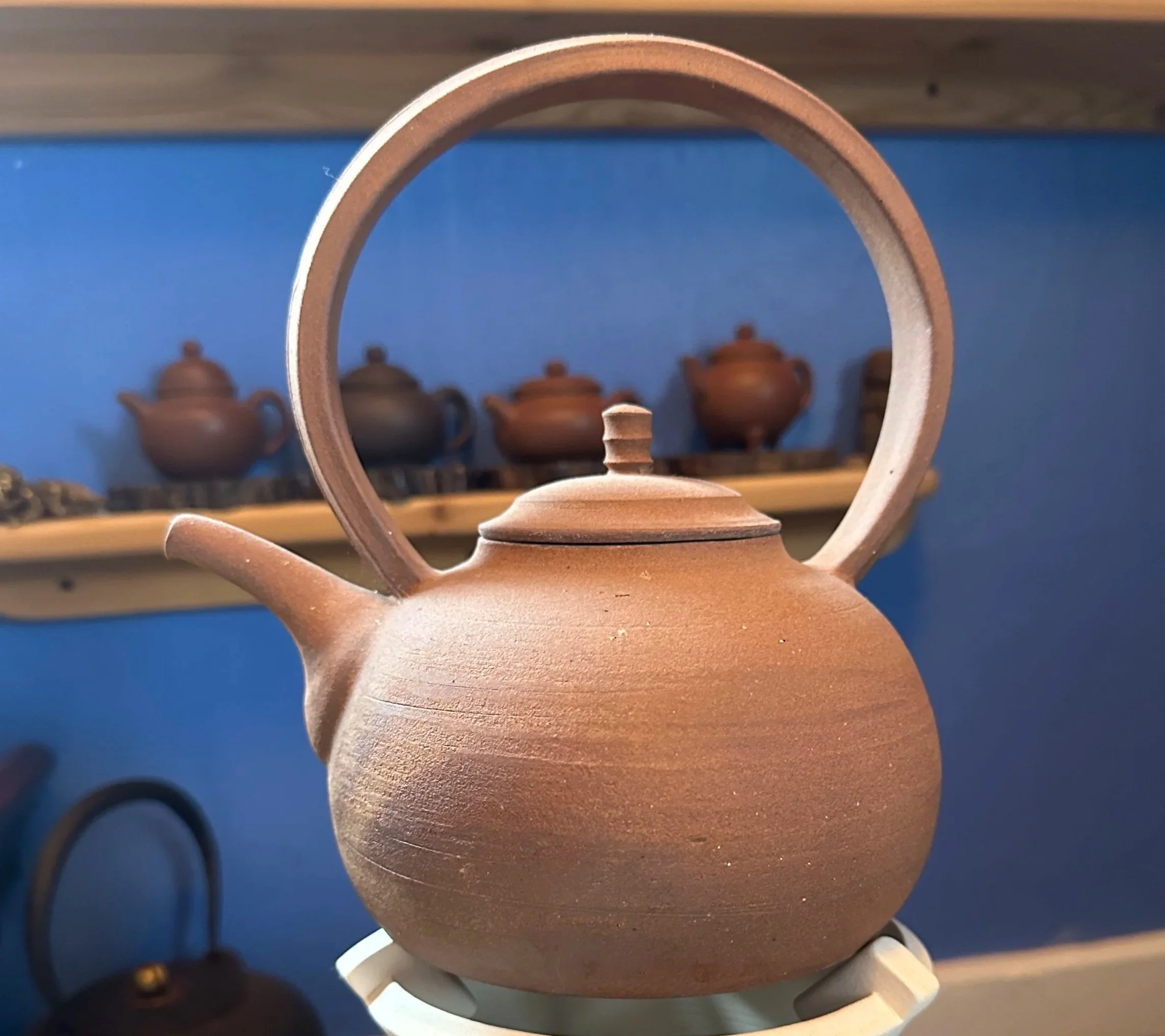
Clay kettles offer a more subtle and integrative experience. Formed from earth, they carry a natural grounding quality that is felt in the water—softening its edges and bringing its elements into delicate balance.
Rather than emphasizing any one characteristic, clay supports continuity. The water feels cohesive, allowing the tea to unfold in a way that is steady and unforced.
The vessel itself becomes part of the process. With use, it begins to hold the memory of the waters it has known, gently shaping what comes forward.
For many, clay sits between the qualities of iron and silver—neither shaping nor revealing too strongly, but holding a natural harmony between water and tea.
In time, these differences become something you can feel.
If you feel drawn to explore working with a kettle in your own practice, you’re welcome to begin here.
Some pieces are available through the shop, while others are shared more directly.